History through the lens of photography
Throughout modern history, photographs have not only documented events but actively changed the course of decisions, laws, and public awareness. In several cases, a single image became the turning point that forced societies to confront problems they were ignoring.
Throughout modern history, photographs have not only documented events but actively changed the course of decisions, laws, and public awareness. In several cases, a single image became the turning point that forced societies to confront problems they were ignoring.
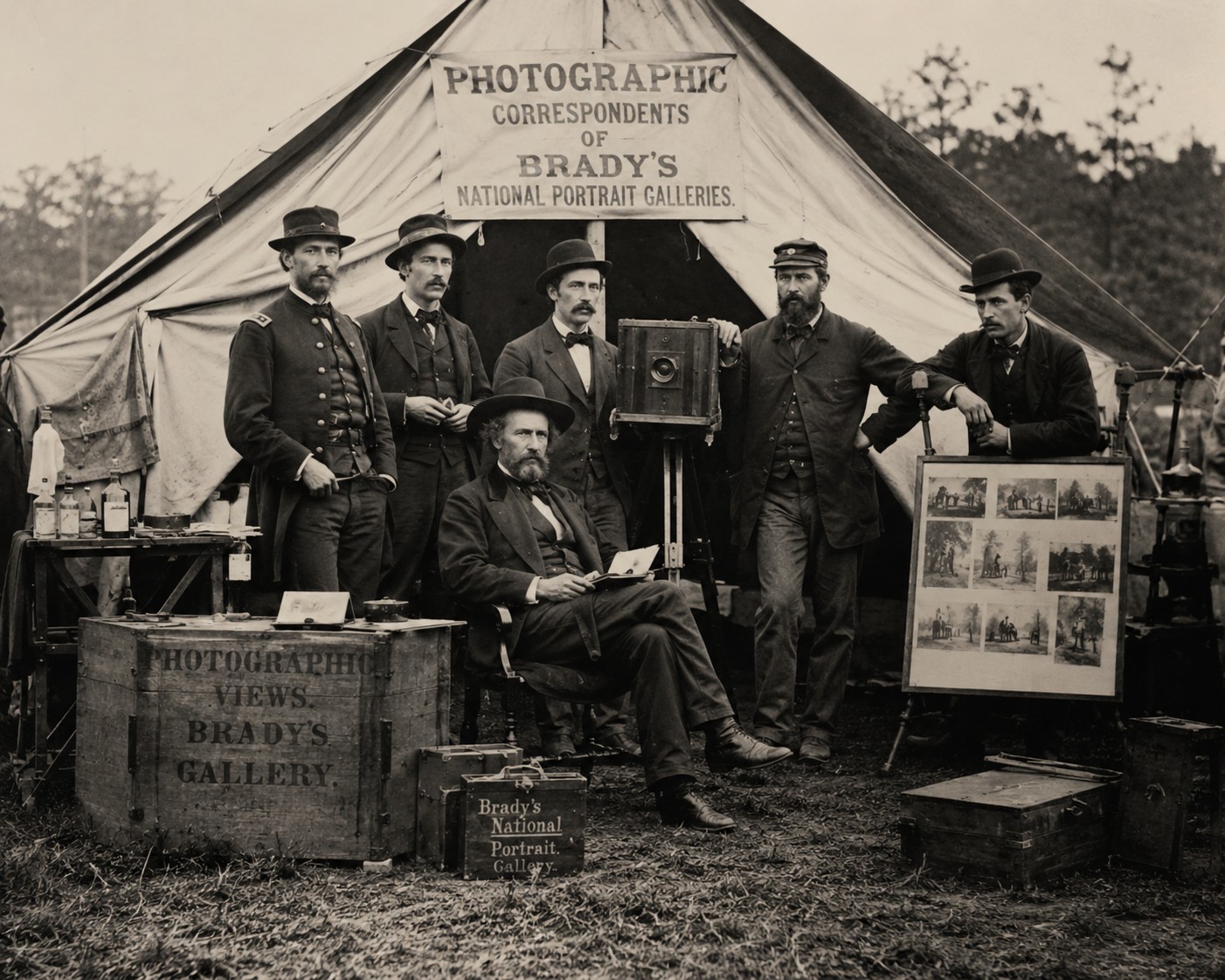
One of the earliest powerful examples comes from the American Civil War, when photographer Matthew Brady and his team brought images from battlefields into public view. Before that, war was largely understood through heroic paintings and written reports. Brady’s photographs showed something very different—mud, exhaustion, and the brutal reality of death. When these images were exhibited in cities like New York, they shocked the public. For the first time, people saw war not as honor and glory, but as human cost. This shift in perception influenced how civilians understood military conflict and changed expectations about reporting future wars.
A few decades later, photography played a direct role in social reform. In the late 1800s, journalist Jacob Riis used flash photography to expose the living conditions in New York City tenements. His book, How the Other Half Lives, combined images of overcrowded, dark, and unsafe housing with detailed reporting. These photographs were not just illustrations—they were evidence. Reformers and city officials could no longer dismiss claims of poverty as exaggeration. As a result, housing laws in New York began to change, leading to improved sanitation, building regulations, and tenant protections.
In the 20th century, photographs again became catalysts for justice during the American Civil Rights era. One of the most haunting examples came from the case of Emmett Till, a 14-year-old boy brutally murdered in Mississippi in 1955. His mother insisted on an open-casket funeral, and photographs of his disfigured face were published in magazines. Those images spread across the country and created a national shockwave. Many historians consider this moment a turning point that helped energize the Civil Rights Movement, because people could no longer ignore the reality of racial violence when confronted with visual proof.
Later, during the Vietnam War, photojournalism continued to shape public opinion. One of the most influential images was taken in 1972, showing a young girl, Phan Thi Kim Phuc, running down a road after a napalm attack. The image captured immediate human suffering in a way that official reports could not. It intensified public opposition to the war in the United States and increased political pressure to end the conflict. In this case, photography did not just document history—it actively influenced policy discussions and public sentiment.
In more recent history, photographs have also exposed hidden institutional abuse. Images from Abu Ghraib prison in Iraq, leaked in the early 2000s, revealed mistreatment of detainees by U.S. personnel. Without those photographs, the events may have remained largely unseen or disputed. Instead, the visual evidence triggered investigations, legal consequences, and changes in military oversight procedures.
Across all these cases, a common pattern emerges: photographs turn abstract issues into undeniable reality. They compress complex situations into a single moment that people can emotionally and intellectually grasp. Whether exposing injustice, revealing hidden conditions, or shifting public opinion, photography has repeatedly acted as a catalyst for change—not just recording history, but helping to correct it.